Southern Electric Is The Carolina's Most Trusted Residential Electrical Service Provider. Call Us Today: (803) 250-1449

Landscape Lighting Installation in Tega Cay: Building a System That Lasts
Southern Electric
6/15/20264 min read
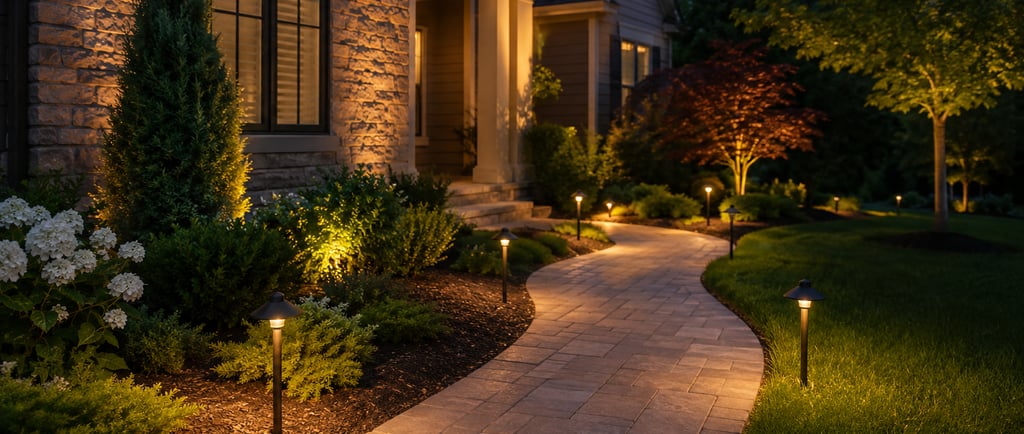
Adding outdoor lighting to your Tega Cay home lets you enjoy your patio longer, shows off your landscaping, and makes walkways safer at night. In a waterfront community where curb appeal is important, a well-lit home stands out after sunset.
Not all lighting installations last. Some look good at first but start having problems within a year. We get many requests for landscape lighting in Tega Cay, and we know which choices make a system reliable and which shortcuts can cause early failures.
Low-Voltage vs. Line-Voltage Landscape Lighting
Most homes use low-voltage outdoor lighting systems that run on 12 volts and are powered by a transformer plugged into an outdoor outlet. These systems are easier to move as your yard changes and are safer to work around during landscaping. Line-voltage systems use 120 volts and need protective underground conduit and a licensed electrician for wiring.
From what we have seen, larger properties in Tega Cay and Fort Mill often do best with a mix of both systems. We use a low-voltage transformer for path lighting and line-voltage fixtures for brighter lighting on big trees or architectural features.
Understanding Transformers and Load Capacity
A landscape lighting transformer is rated by total watts. Experienced installers use only about 80 percent of that capacity to avoid overloading and early burnout. We often see homeowners use store-bought transformers that are too small for their needs. When we plan a project, our electricians add up the total wattage and leave extra room for any future additions to your yard.
Wire Gauge and Burial Depth Matter More Than Fixtures
The most common problem in outdoor lighting is not the fixtures, but the wire.
Wire Gauge: If the wire is too thin, it causes a "voltage drop," making lights at the end of the run dimmer than those near the transformer. We use heavy-duty 12-gauge wire for any run over 50 feet. Cheaper installations often use 16-gauge wire to save money, but this can cause dimming problems within a year or two.
Burial Depth: Low-voltage wire should be buried at least 6 inches deep to protect it from lawn tools and growing roots. The sandy soil near Lake Wylie and Tega Cay can cause erosion, which may expose shallow wires sooner than you might expect.
Selecting the Best Fixtures for the Carolina Climate
Humidity is a big problem for outdoor electrical work along the South Carolina-North Carolina border. The fixtures that fail the fastest are usually the cheapest ones, made with plastic housings and little weatherproofing.
If you want your system to last, choose brass, copper, or cast-aluminum fixtures. For homes right on the water in Tega Cay, we strongly suggest using marine-grade hardware. Moisture and other factors near the lake can quickly cause cheaper materials to corrode.
Smart Timers and Photocell Options
A transformer with a photocell will turn your lights on at dusk and off at dawn, adjusting for changes in daylight throughout the year. More advanced smart units can connect to smartphone apps, letting you control your lighting schedule from anywhere. We help you pick the setup that matches how much automation you want.
Avoiding Common Fixture Placement Mistakes
Most DIY landscape lighting projects run into trouble with fixture placement.
Uplighting: These fixtures work best when placed 6 to 12 inches away from a tree trunk instead of right at the base, where they can get buried under new mulch.
Path Lighting: If lights are too close together, they can wash out the area instead of guiding the eye. We usually recommend spacing path lights 8 to 10 feet apart, but this can change depending on how bright the fixtures are.
Spotlighting: Spotlights aimed directly at the street or a security camera create severe glare problems. The goal is always to illuminate what you are highlighting, not to create a nuisance for your neighbors.
Frequently Asked Questions About Landscape Lighting
Do I need a licensed electrician for landscape lighting? Low-voltage systems that plug directly into an existing outlet can often be set up by a homeowner. However, if you need a new dedicated outlet, underground conduit burial, or any line-voltage work, a licensed electrician is required by law. Our team handles both electrical infrastructure and fixture installation to simplify the project.
How much does professional landscape lighting cost? The price depends on how many fixtures you need, how long the wire runs are, and if you need a new heavy-duty transformer. A basic path-lighting system costs much less than a full multi-zone design. We always give you a clear, detailed quote before starting any work.
Can my current outdoor outlet handle a landscape lighting transformer? Most standard outdoor outlets can support a low-voltage transformer. We always check that the outlet has GFCI protection, is not overloaded, and is in a safe spot for the planned wiring. If it does not meet these three requirements, we will upgrade it as part of the job.
What happens to the system if I update my landscaping? Many homeowners ask this when they redo their yards. Low-voltage systems are very flexible. You can move fixtures easily, and add new zones if your transformer can handle it. We also give you a detailed wire diagram after every installation so your landscapers know where not to dig.
Schedule Your Landscape Lighting Consultation
Southern Electric designs and installs premium landscape lighting in Tega Cay, Charlotte, Rock Hill, and Fort Mill. We bring the same rigorous attention to electrical quality on every project, whether it is a modest path setup or a full multi-zone property design.
Call us today at (803) 250-1449 or check out what other local homeowners have said about our work on our Google Business Profile.
Contact Us
info@southernelectricllc.com
(803) 250-1449
Service Areas
Subscribe to our newsletter
Fort Mill, SC
Tega Cay, SC
Indian Land, SC
Charlotte, NC
Rock Hill, SC